*Only valid on select new 2026 Mercedes-Benz Sprinter Cargo and Crew vans (excluding Cab Chassis, and all Passenger Van models). Qualified commercial customers only. 3.90% APR financing for 24 months at $43.38 per month, per $1,000 financed, 3.90% APR financing for 36 months at $29.48 per month, per $1,000 financed. Combinable with applicable Customer Cash offer from Mercedes-Benz USA, LLC (MBUSA). Excludes leases and balloon contracts and National Fleet customers. Available only at participating authorized Mercedes-Benz Vans dealers through Mercedes-Benz Financial Services (MBFS). Must take delivery of vehicle by September 30, 2026. Specific vehicles are subject to availability and may have to be ordered. Subject to credit approval by MBFS. Actual rates, terms, down payment, and program eligibility will be determined by MBFS Credit Team based upon credit worthiness of the customer. Program rates or terms may be changed or the program may be terminated at any time at the sole discretion of MBFS. Offer is subject to limits on the total amount financed. See your authorized Mercedes-Benz Vans dealer for complete details on this and other finance offers. Offer valid through September 30, 2026. **$3,000 Customer Cash available on new 2026 Mercedes-Benz Sprinter Cargo Van and Crew Van vehicles (excluding eSprinter Cargo Van and Sprinter Passenger Van models) purchased from dealer stock. Dealer price and customer cash amount may vary. See participating dealer for details. May not be combined with other special offers except where specified. Customers who participate in Special Lease do not qualify for Customer Cash. Customer Cash offer ends September 30, 2026.
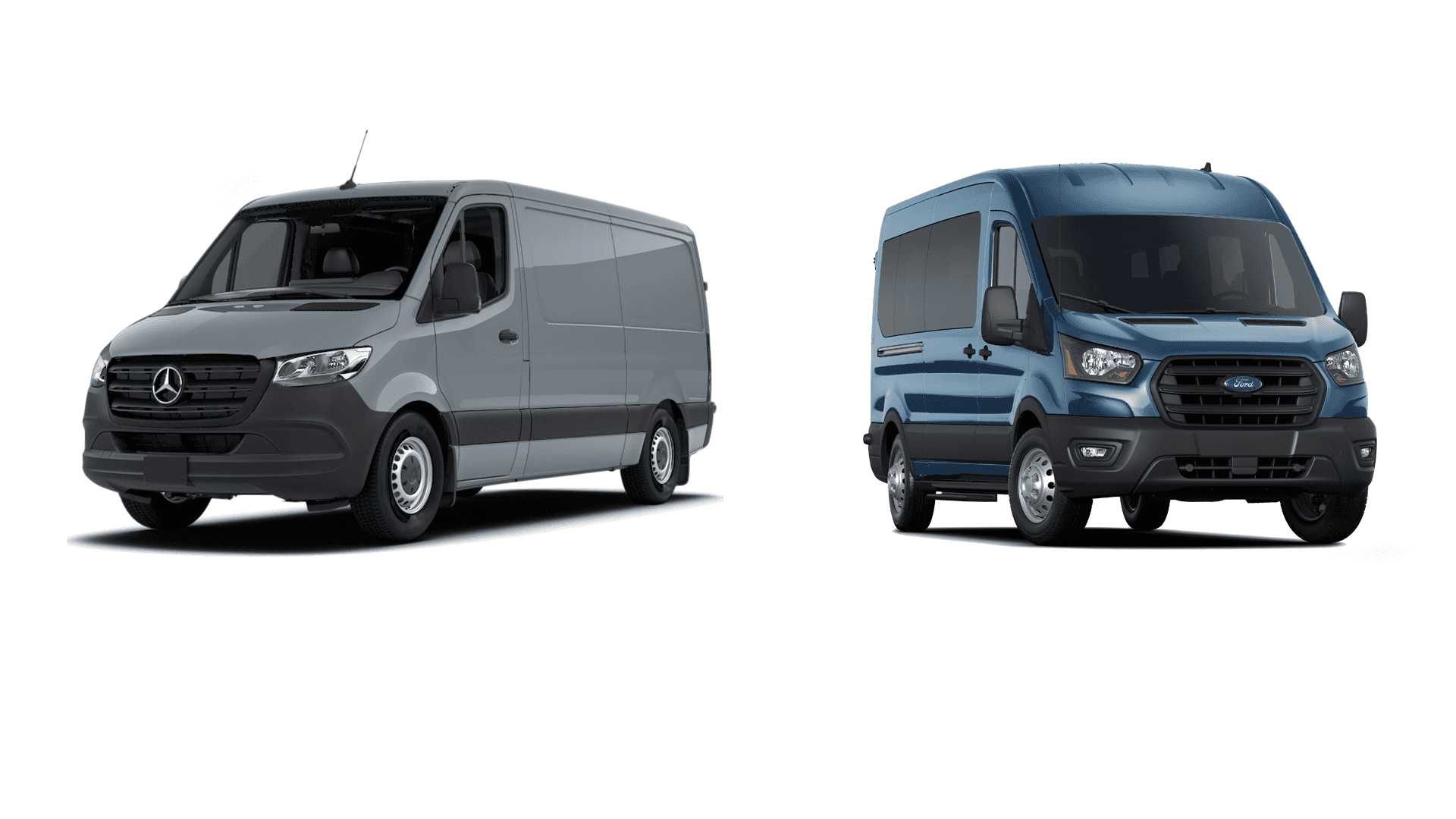
Mercedes-Benz Sprinter vs. Ford Transit
When comparing the Ford Transit to the Mercedes-Benz Sprinter for serious commercial use in Riverside and the Inland Empire, the difference is clear. The Sprinter is engineered as a premium work van built for long routes, demanding payload needs, and professional fleet operations. With available diesel power (by model year), available AWD (by model year), high-roof and extended-body options, and advanced Mercedes-Benz technology, the Mercedes-Benz Sprinter stands out as the clear choice for businesses that refuse to compromise.
Mercedes-Benz Sprinter vs. Ford Transit at a Glance
Category
Mercedes-Benz Sprinter
Ford Transit
Starting MSRP*
Cargo Van starting at $50,830*
Cargo Van starting at $47,400*
Max Towing Capacity*
Up to 7,500 lbs (varies by configuration)
Up to 6,900 lbs (Cargo Van; varies by configuration)
Max Payload Capacity*
Up to 6,812 lbs (varies by configuration)
Up to 5,110 lbs (varies by configuration)
Available Diesel Engine
Yes (by model year)
No (gas and electric options by model)
Available AWD
Yes (by model year)
Yes (varies by configuration)
Maximum Cargo Volume*
Up to 532.6 cu ft
Up to 536.4 cu ft
Interior Height (High Roof)
Up to 110.9 inches
Up to 81.5 inches
Resale Value & Fleet Perception
Consistently higher
Varies widely by upfit and fleet use
*MSRP and fuel efficiency descriptions are general and can vary by model year, engine, drivetrain, options, and incentives. Availability, specifications, and pricing vary by configuration. Verify exact pricing and ratings with our team at Mercedes-Benz Van Center of Riverside.
Customization and Build Flexibility
Wheelbase options: 144 in, 170 in, and 170 in Extended
Overall body lengths up to ~290 in (24 ft)
Interior standing heights up to ~79 in with High Roof configuration
Cargo lengths up to 189 in on Extended models
Available trims: Cargo Van, Crew Van, Passenger Van, Chassis Cab
Towing and Payload Capability
Up to 7,500 lbs of towing capacity
Payload capacity of up to ~6,812 lbs
Available trailer stability support
Commercial-grade frame design
*Towing and payload ratings vary by model year, engine, drivetrain, roof height, wheelbase, equipment, and upfit. Confirm exact figures for your chosen Sprinter configuration with our team.
Powertrain and Drivability
Available turbo-diesel engine (by model year)
Up to 295 lb-ft of torque (diesel standard output)
9-speed automatic transmission
Estimated fuel economy up to ~22 mpg highway (varies by configuration)
Cargo Space and Interior Usability
Up to 532.6 cubic feet of cargo volume
Multiple roof heights and wheelbases
Wide rear and sliding door openings
Flat load floor and vertical sidewalls
Safety and Technology
Driver Assistance
Designed to support safer, more consistent fleet operation
Available active braking support (varies by model year)
Available blind spot monitoring and lane support systems
Available parking aids for easier maneuvering
Cabin Technology
Modern, professional cockpit layout
Intuitive controls designed to minimize distraction
Available navigation and connectivity features
Technology designed to support daily productivity
Upfit Integration
Built to support a wide range of commercial upfits
Compatible with shelving, partitions, and cargo systems
Supports specialized equipment including refrigeration and power
Designed for long-term reliability with business use
Driver Comfort & Visibility
Upright seating position for improved road visibility
Ergonomic cabin layout designed to reduce fatigue
Wide windshield and improved sightlines
Ride quality tuned for long workdays
Why the Mercedes-Benz Sprinter Is the Clear Choice
Mercedes-Benz Sprinter
✔Service intervals up to ~20,000 miles for high-mileage commercial use.
✔Available diesel torque up to 295 lb-ft (by model year).
✔Available AWD paired with wheelbases up to 170 in Extended.
✔Interior standing height up to ~79 in with High Roof configuration.
✔GVWR ratings up to ~11,030 lbs supporting fleet durability.
✔Factory upfit-ready design with Cargo, Crew, Passenger, and Chassis Cab configurations.
Ford Transit
✖Shorter service intervals compared to Sprinter.
✖No widely available factory diesel option in recent model years.
✖AWD availability varies by configuration.
✖Less composed highway feel under sustained heavy loads.
✖Lower resale performance in high-mile commercial fleets.
✖More limited long-term upfit scalability.
Ownership Value and Long-Term Investment
For businesses that measure success in uptime, driver retention, and long-term value, the Mercedes-Benz Sprinter is engineered to deliver. When properly configured, Sprinter’s higher ceiling on towing and payload supports demanding routes and equipment-heavy operations, while the available diesel option (by model year) brings the kind of torque many fleets prefer for highway miles. Strong cargo flexibility across wheelbases and body styles helps future-proof upfits, and Sprinter’s premium fleet perception supports long-term confidence as your operation grows.
Transit vs. Sprinter FAQ
Is the Sprinter better for long daily routes and high mileage?
Yes. When properly configured, Sprinter supports up to 7,500 lbs of towing and up to 6,812 lbs of payload, and its long-wheelbase platform is built for stable, fatigue-reducing highway driving under commercial loads.
Why do professional fleets upgrade from Transit to Sprinter?
Many fleets upgrade to Sprinter for higher capability ceilings, including towing up to 7,500 lbs, payloads up to 6,812 lbs, and a broader commercial configuration lineup designed to scale with upfits and long-route use.
Is the Sprinter better for towing and heavy payloads?
Yes. When properly equipped, the Sprinter supports towing up to 7,500 lbs and payload capacities up to 6,812 lbs while maintaining stability under full-day commercial loads.
Is AWD important for commercial vans in Southern California?
Yes. Available AWD on the Sprinter (by model year) distributes power to all four wheels and is paired with wheelbases up to 170 in Extended, improving control on wet roads, uneven job sites, and mountain routes.